Issue No. 6 · Tuesday · June 30, 2026
What’s Inside:
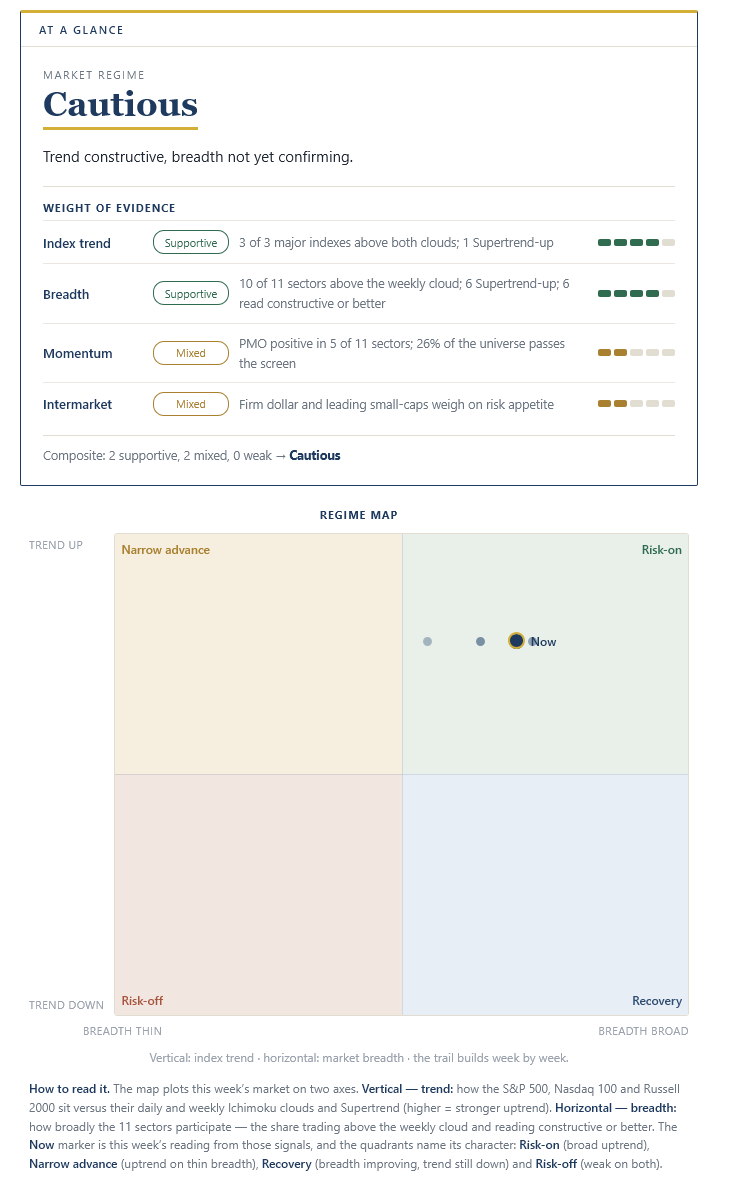
At a Glance - A “weight of the evidence” look at the current market environment, as well as my Regime map.
The Call - A deeper dive into the “weight of the evidence.”
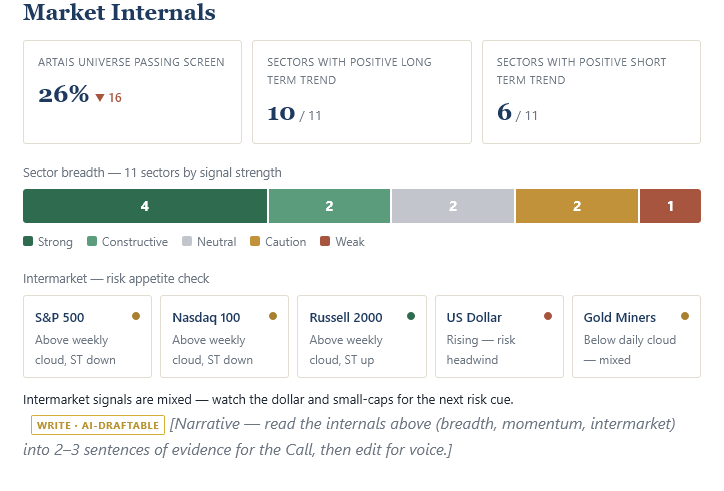
Under the Hood - Current market internals, sector breadth, and intermarket analysis.
Sector Watch - Which sectors pass/fail the screening process.
Current Screen - Which stocks pass the screening process.
What I Am Watching - Stocks I am watching that are approaching a passing grade in the screening process. Plus, what changed from last week.
At a Glance
Market regime: Cautious to Improving
The Call
Cautious to Improving - The relative rotation graph (RRG) of the broad market indices is showing that rotation away from small and mid-cap stocks into their large-cap counterparts is beginning:
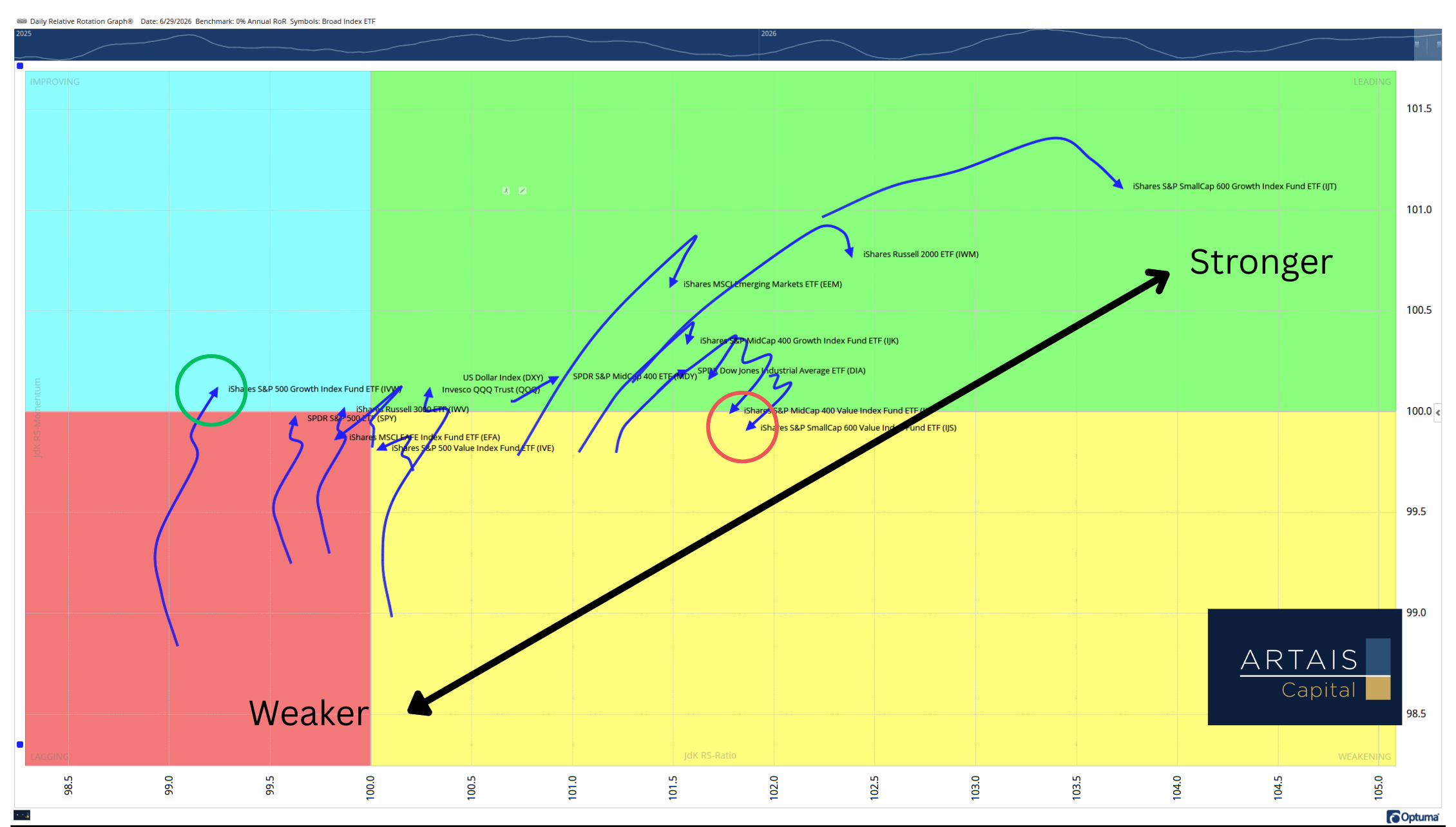
Currently, areas like large-cap growth are starting to display improving momentum at the expense of small and mid-cap names.
To help verify this rotation, we should look at the defensive sectors of the market.
Defensive sectors, like Health Care and Real Estate, provide goods and services people need regardless of the economy, so they tend to hold up better during downturns but grow more slowly.
Growth sectors depend on expanding economies and rising spending, offering bigger gains in good times but steeper losses when conditions turn.
In short, defensives prioritize stability and income, while growth sectors prioritize upside and capital appreciation.
For the past few weeks, money has flowed into these defensive sectors, but they are now trading at key levels.
For example, Health Care is trading near overhead resistance - an area where investors have sold in the past (which are often used as short-term price targets):
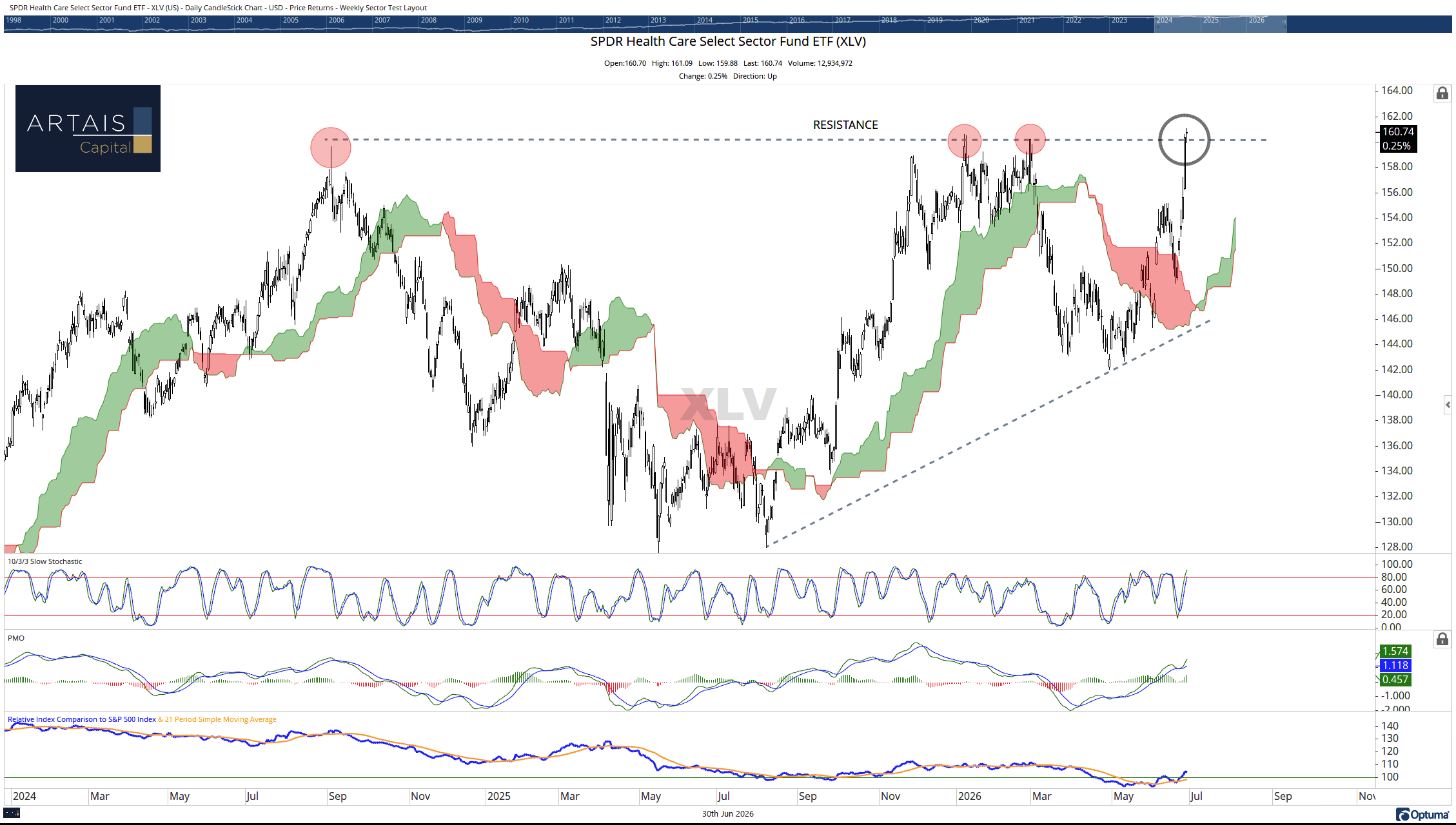
Health Care: trading at resistance
Why does resistance matter? It is a level that short and longer-term traders watch.
If short-term traders don’t sell here, it means they are expecting the sector to continue to rise.
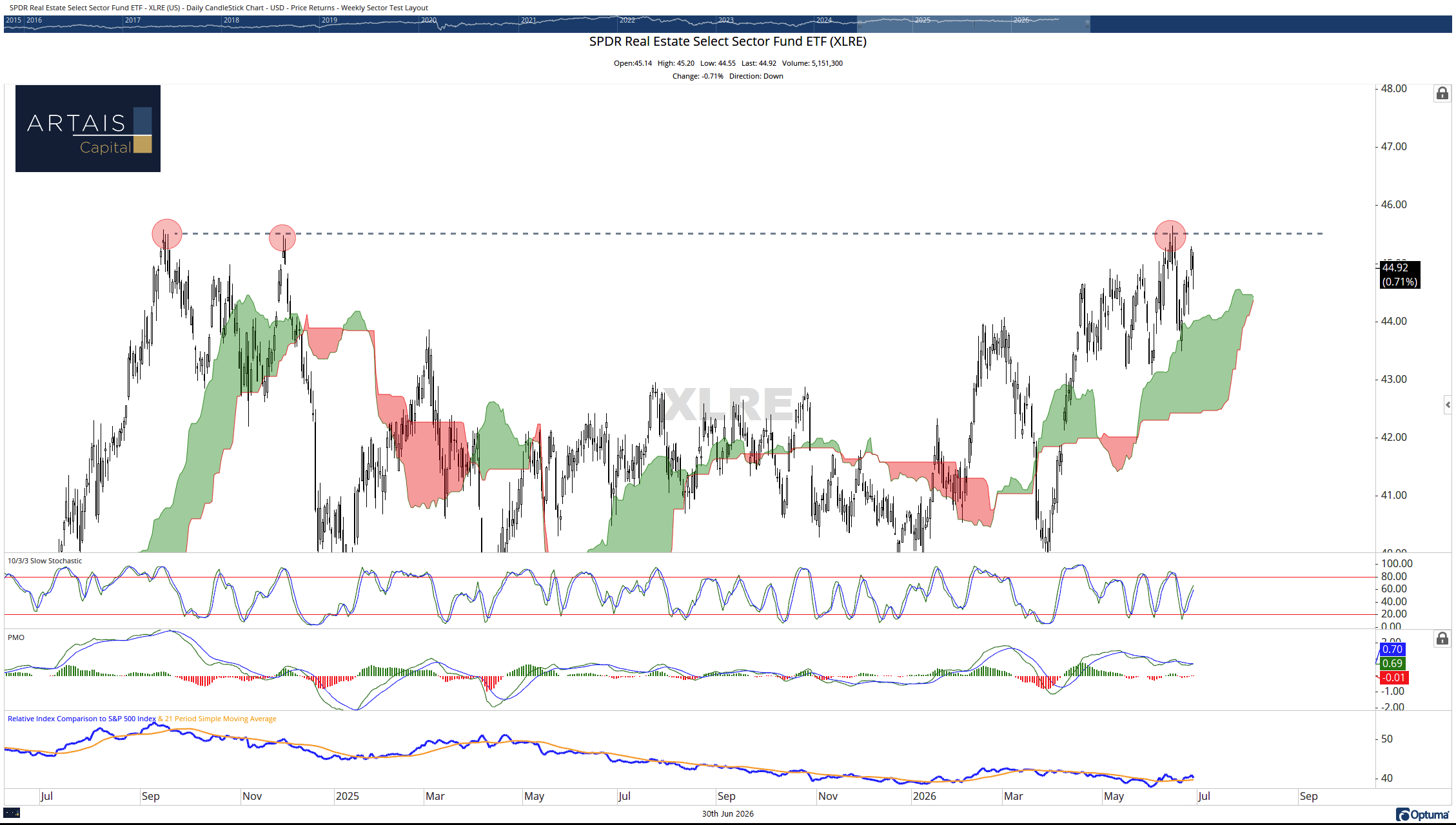
Real Estate: trading at resistance
Longer-term traders will also be watching for a breakout above resistance.
A breakout is an indication that longer-term investors expect to see the rotation into defensive areas of the market to continue.
In other words, a breakout is viewed as a confirmation that the overall theme of the market has changed from growth to defensive.
Weight of the Evidence
When the market is at these transition points, I find looking at the weight of the evidence is helpful.
The Good
First, let’s talk about the positives.
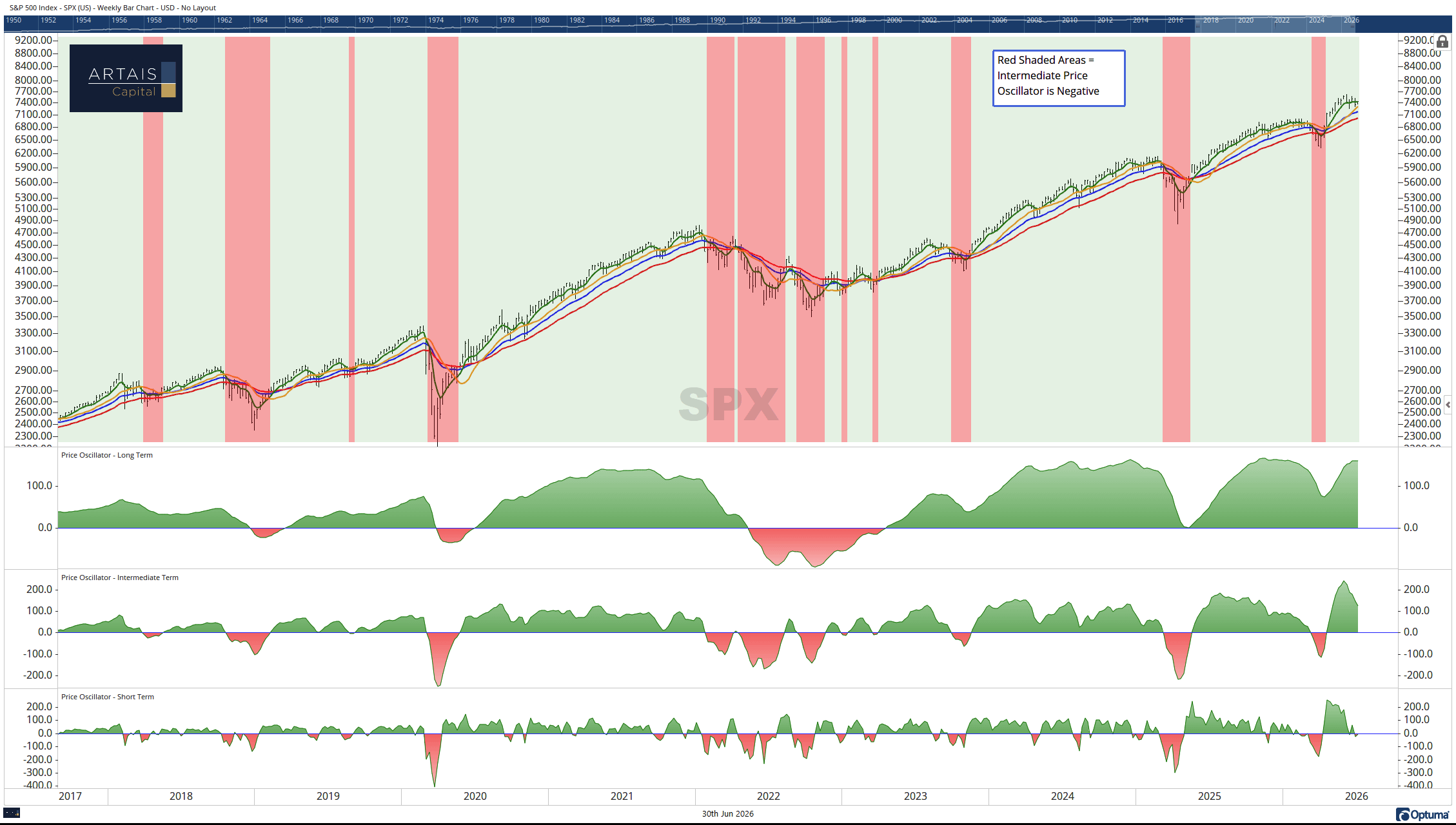
The Intermediate, and Long-Term price trends I follow are all positive, and the short-term price trend, while negative, is improving:
Market rotation, as I mentioned above, is indicating that large-cap growth momentum is improving:
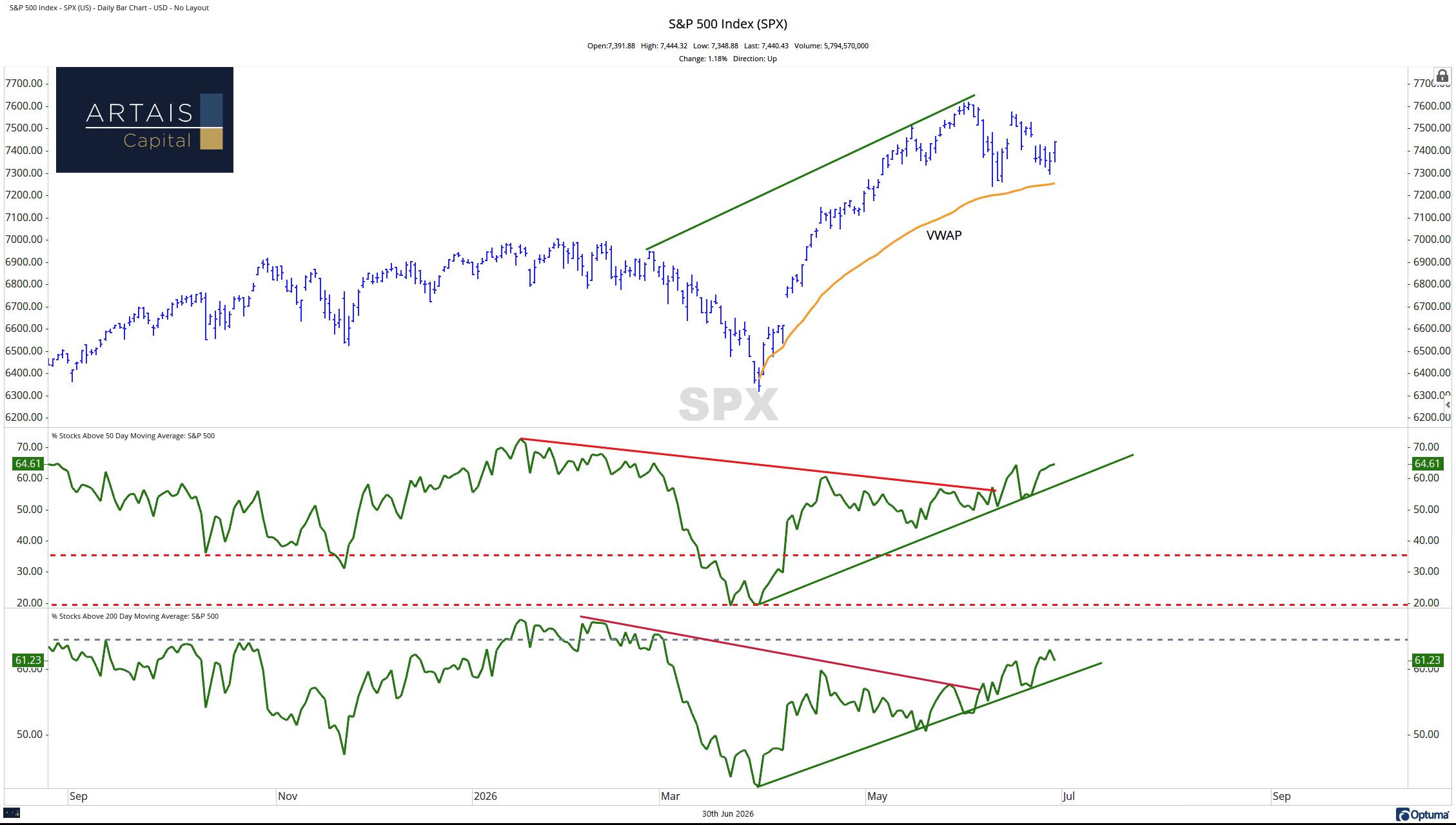
Market Breadth has also been improving. The number of stocks trading above their respective 50-day and 200-day averages continues to rise:
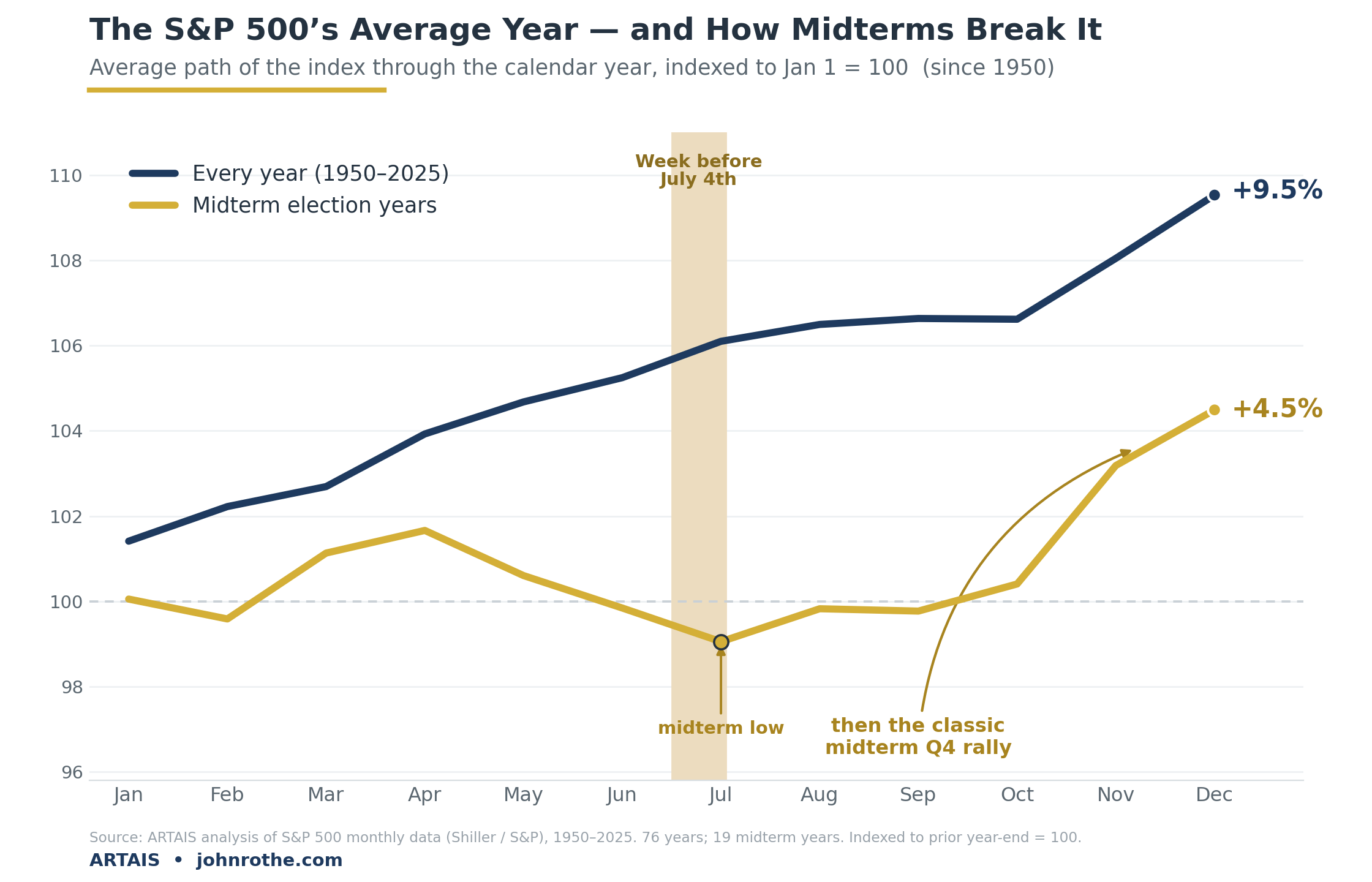
Historical trends indicate that the market is in a bottoming process.
Since 1950, the summer before the US mid-term elections tends to be weak for the S&P 500 index - with the bottom usually occurring in July:
The Bad
Investors continue to worry about AI growth as news stories continue to show corporations rethinking their approach to AI:


Most of the lending to fuel AI growth and expansion has come from Private Equity:
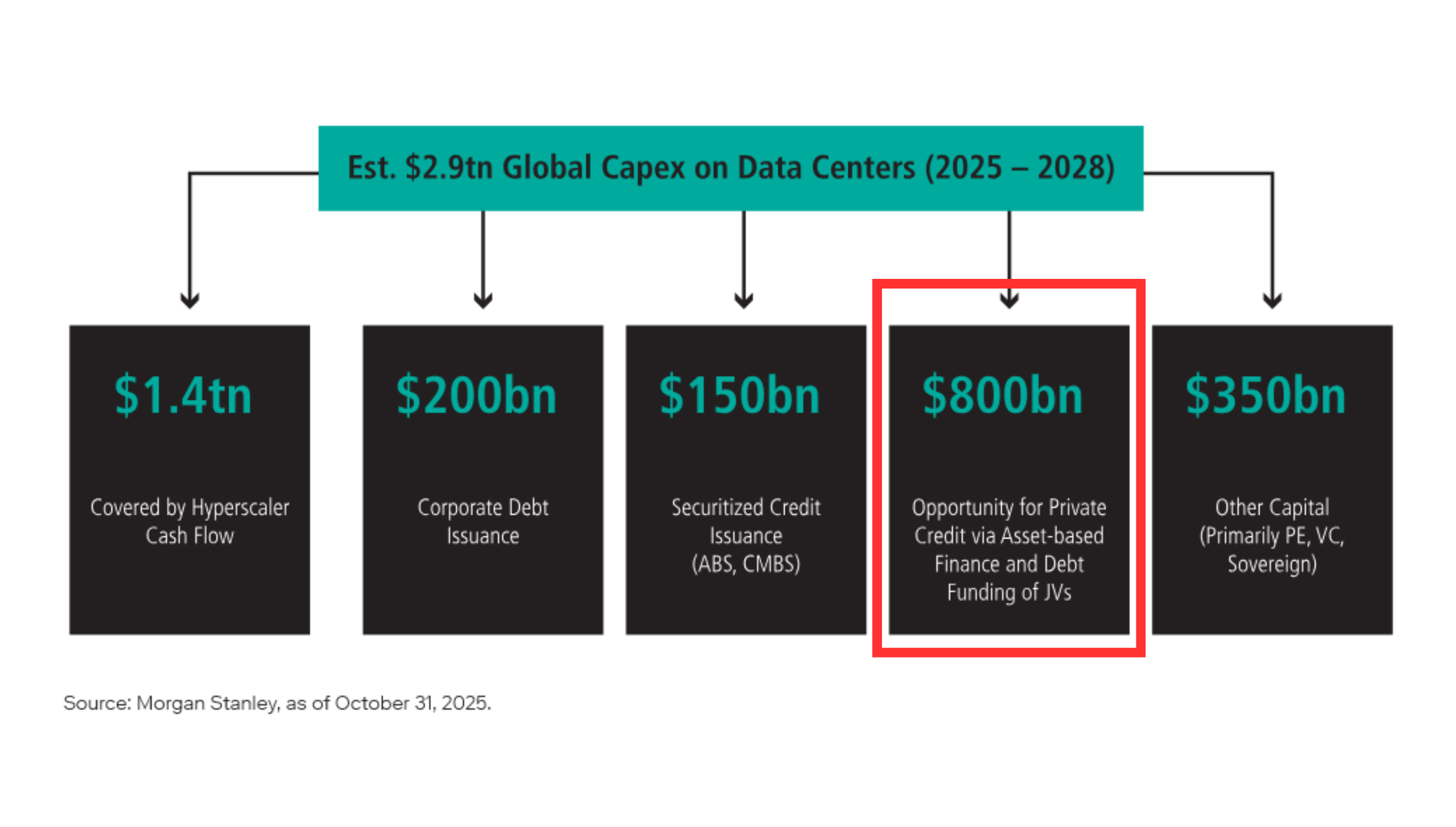
Private credit is lending done by non-bank institutions—like specialized funds—directly to companies, rather than through publicly traded bonds or traditional bank loans.
These loans are typically illiquid and held to maturity, but they often offer higher yields to compensate investors for that reduced liquidity and added risk.
It is an area that is receiving more scrutiny as illiquid loans are harder to price, worrying some that the next banking crisis will come from these loans
The concerning question is whether growth can continue at the current pace, or if we are getting closer to a bubble popping similar to what occurred after the rise in tech during the late 1990s.
High-yield spreads, while currently at low levels, have begun to rise.
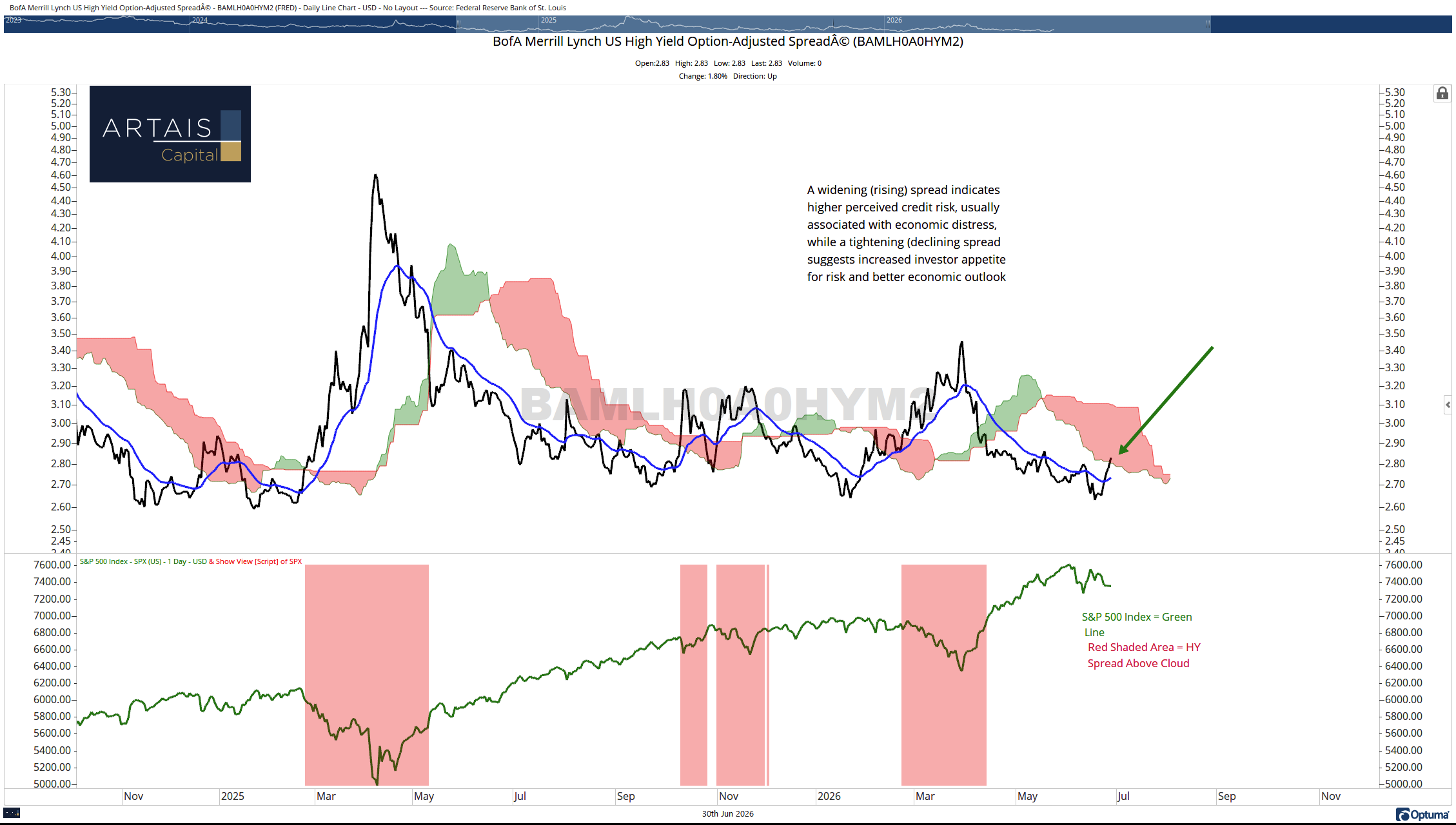
When investors are beginning to worry about risk in the economy (like defaulting loans from AI companies), spreads typically begin to rise.
High-yield spreads are the extra yield (over comparable Treasuries) that investors demand to hold riskier, below-investment-grade "junk" bonds—a gauge of market risk appetite, where widening spreads signal rising fear and narrowing spreads signal confidence.
I will be keeping a close eye on high-yield spreads, as a break above the Cloud model often coincides with larger market pullbacks:
Under The Hood