

Contents:
The 30,000 Foot View
Warning Signs
Market Breadth Continues to Weaken
Here’s What I Am Watching
What May Calm the Bond Market
“The market will punish your theory”
Pass/Fail Screen for AI Universe
The 30,000 Foot View
For the past week, I have been discussing the growing divergence in views between bond and equity investors. The bond market has been sending warning signals that it is not happy with the current state of the economy.
Yields at the long end of the curve continue to rise:
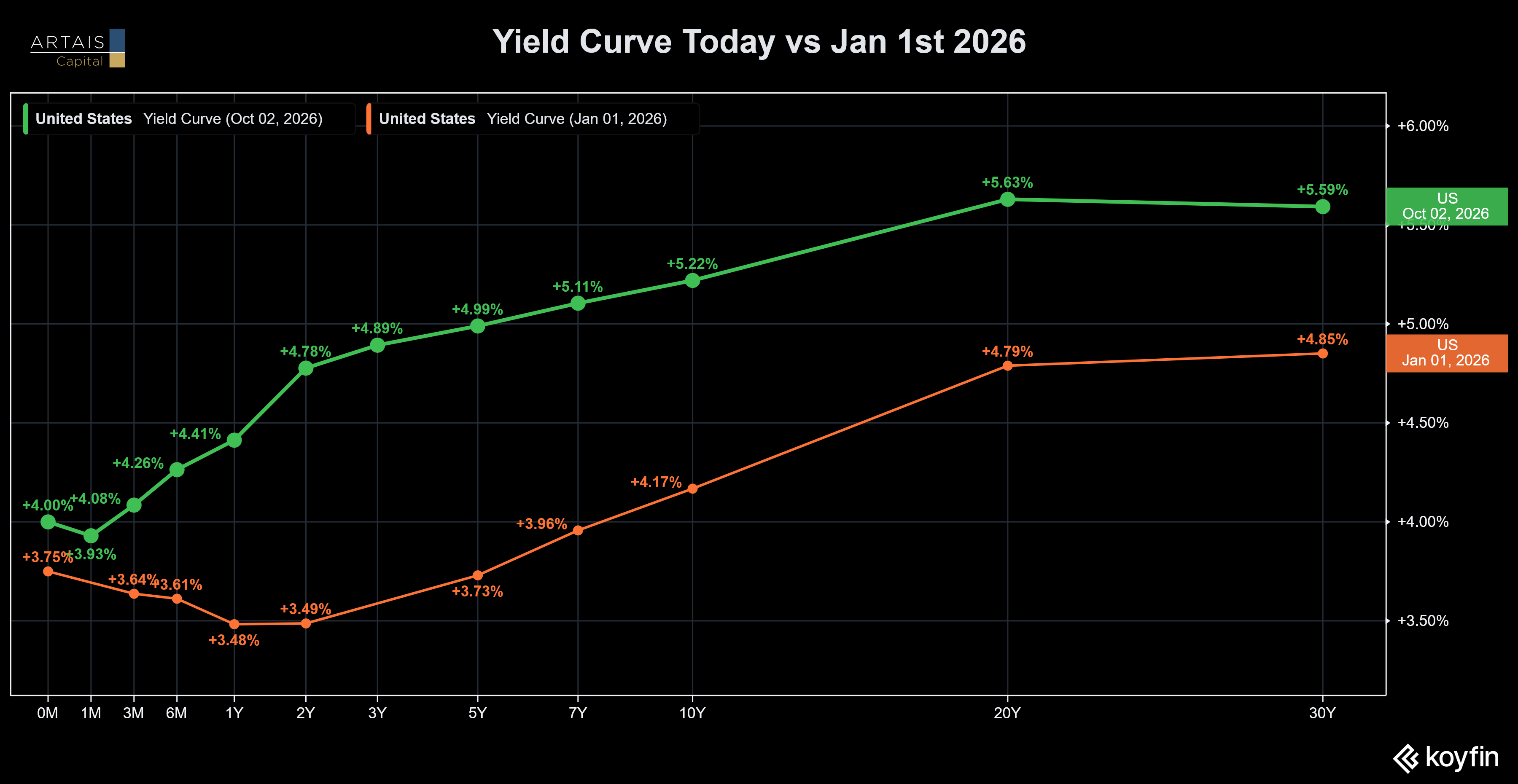
This is occurring because bond investors are demanding to be compensated at a higher rate when they loan money to the US government.
Warning Signs
The bond market has become more worried about spending, inflation, and the fact that the Fed seems to be ignoring the inflation risk.
Eventually, the rise in yields may put too much stress on the system, causing a crisis that the equity markets will negatively respond to.
If we look at the broader stock market, everything seems fine:
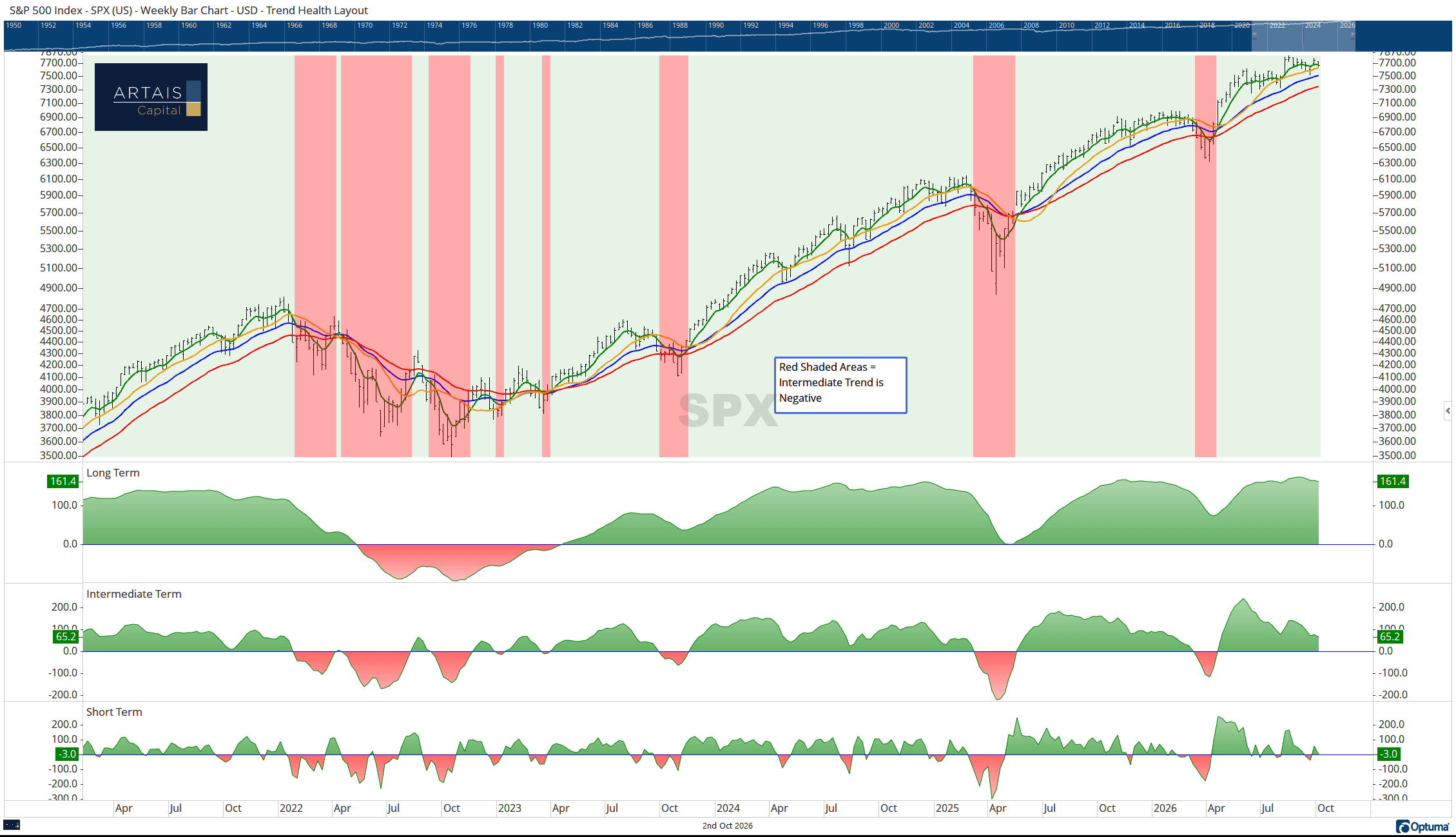
Short, intermediate, and long-term trends are still intact
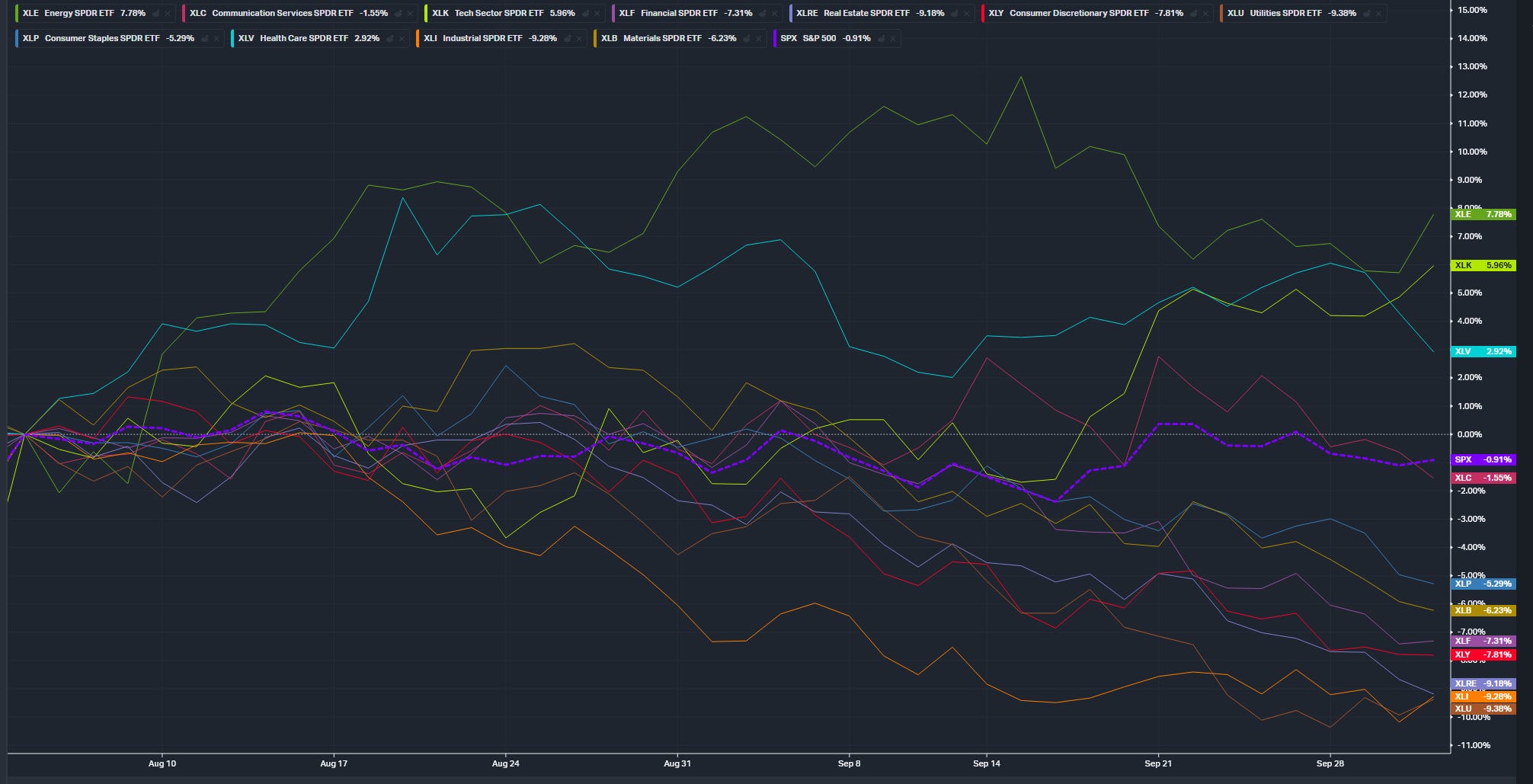
But if we look under the hood, the individual sectors of the index have been struggling.
Since the beginning of August, most sectors have been declining, with the exception of the technology sector:
Market Breadth Continues to Weaken
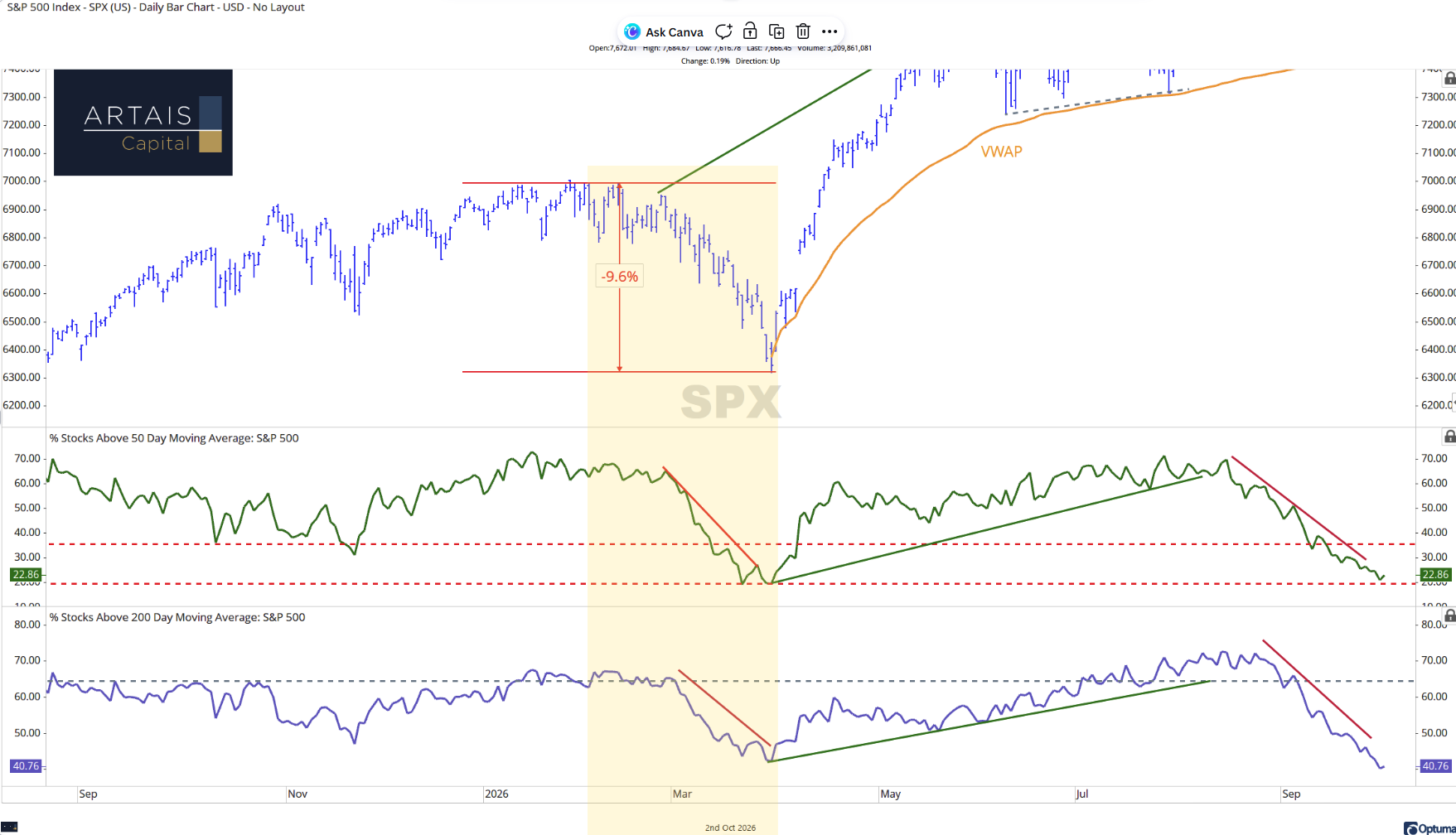
This is why market breadth has been so poor. Currently, only about a quarter of the stocks within the S&P 500 are trading above their 50-day moving average (intermediate trend), and only 40% are trading above their 200-day moving average (long-term trend):
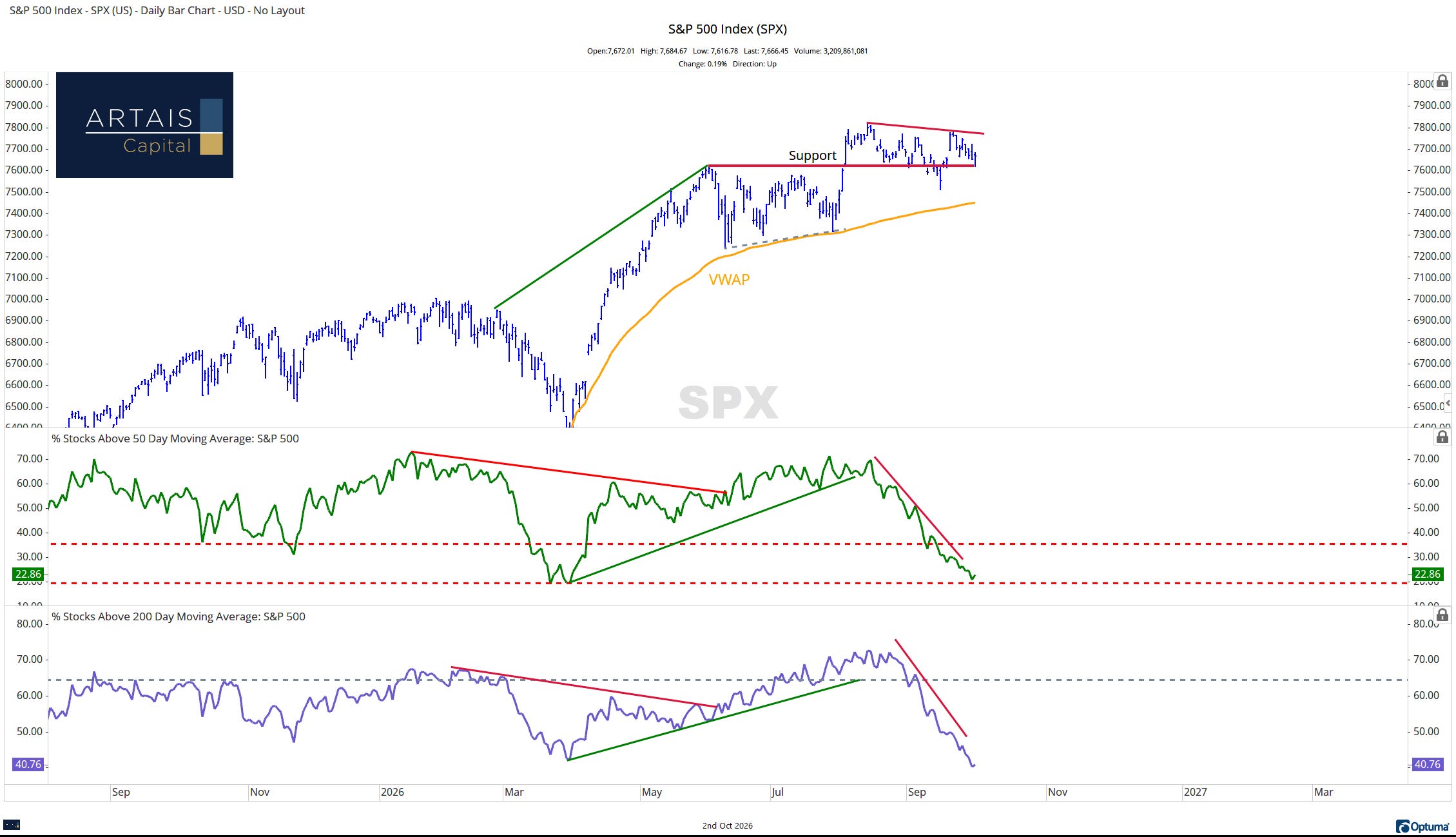
We had a similar decline in market breadth earlier this year, and it was accompanied by a decline of nearly 10% in the S&P 500:
Due to the market capitalization structure of the S&P 500 index, the technology sector now makes up nearly 40% of the index:
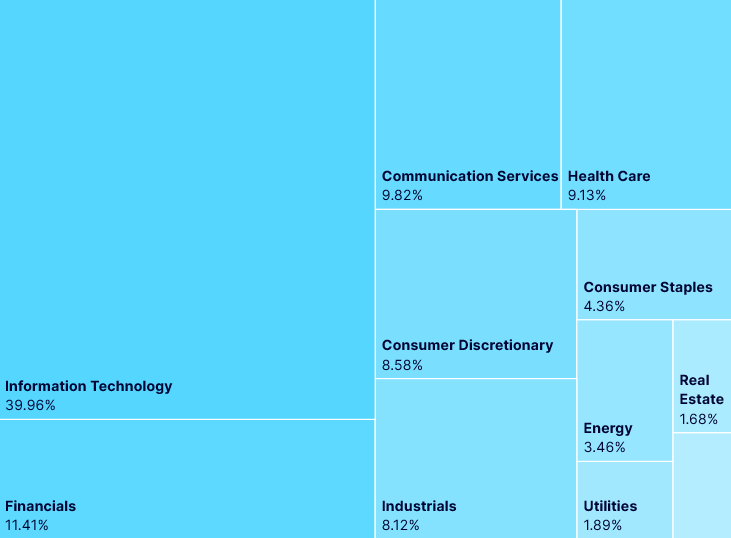
source: State Street
What I Am Watching
So, my concern for the equity market is focused on two areas.
Frist: the strength of the tech sector.
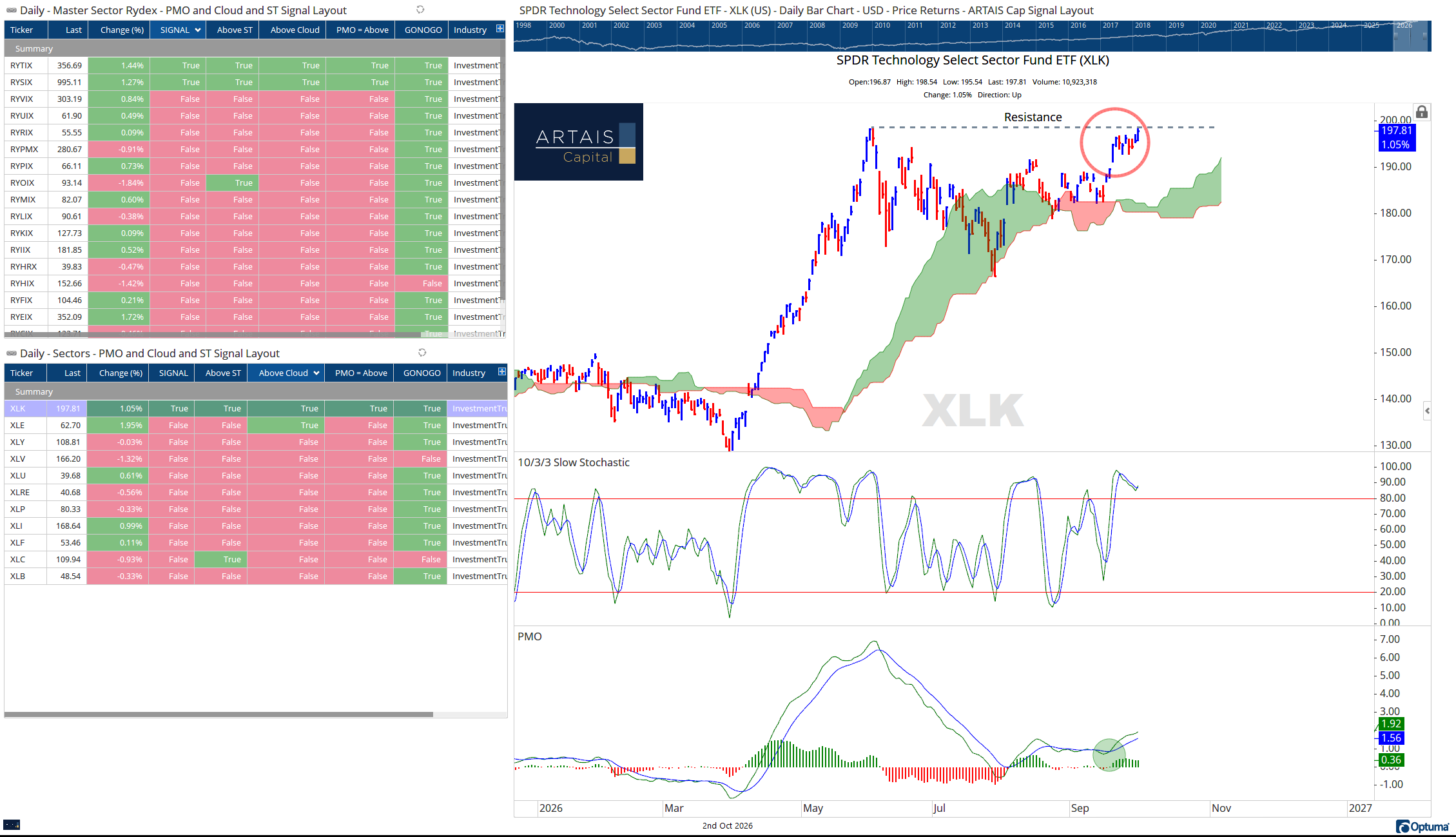
Currently, technology stocks (XLK) are nearing overhead resistance. If too many short term traders start to take profits at this level, the sector may decline enough to scare longer-term investors, causing the sector and the S&P 500 index to decline:
Second: I am watching for failed buy signals - and I am starting to see some.
Below is a Bullish % Index chart, which measures the number of stocks within a sector that are in buy or sell signals.
(Think of a column of Xs as the offense -buyers -on the field, and a column of Os as the defense - sellers.)
Typically, during a normal market rotation between the various sectors of the S&P 500, we will see these sectors move back and forth between oversold and overbought conditions:
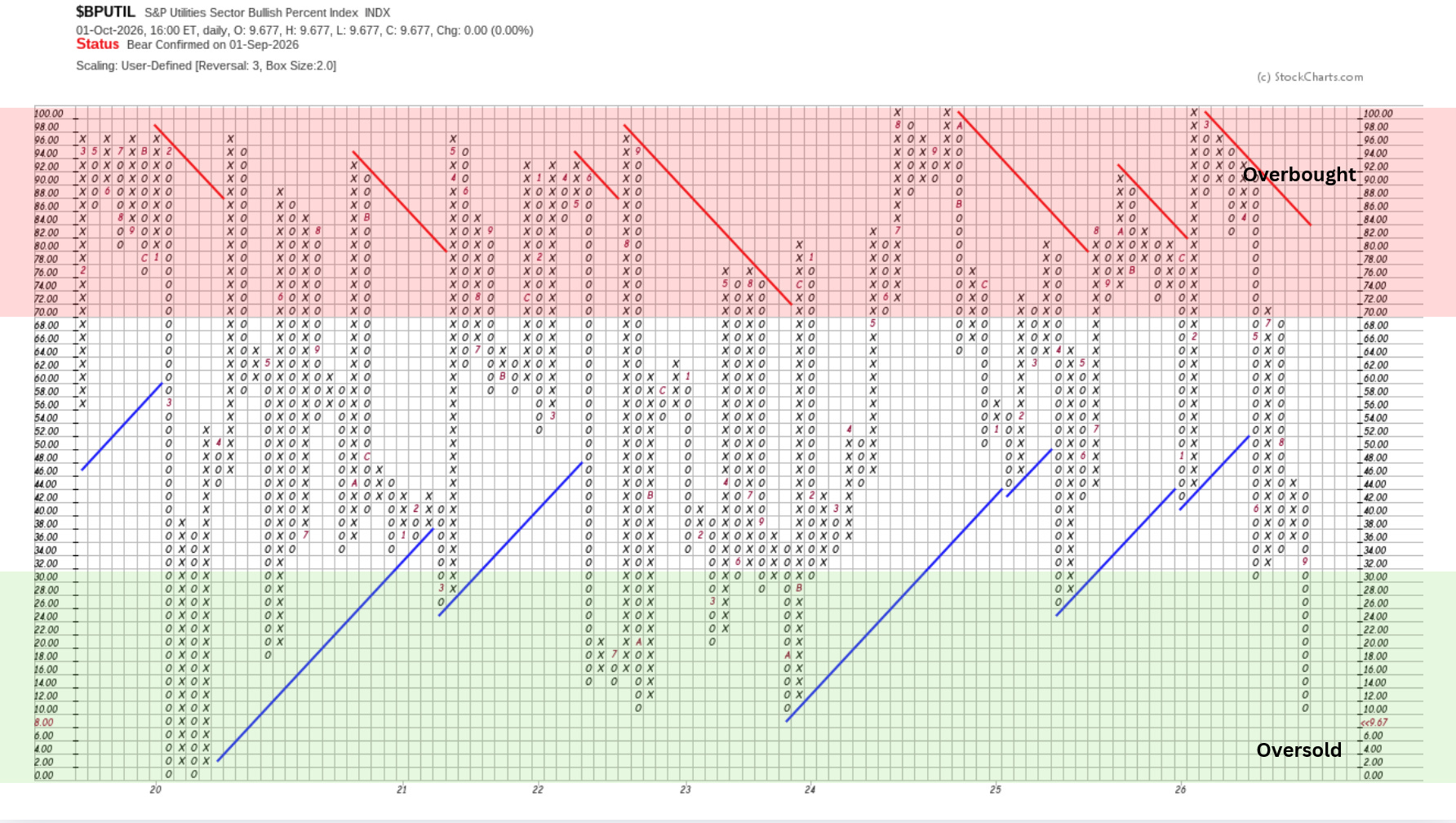
Utilities Sector Bullish % Index
So, in addition to the warning signs from the bond market and market breadth, I am now starting to see failed buy signals appearing within Bullish % Index charts.
For example - the Industrials sector is oversold, and the offense entered, THEN immediately exited the field:
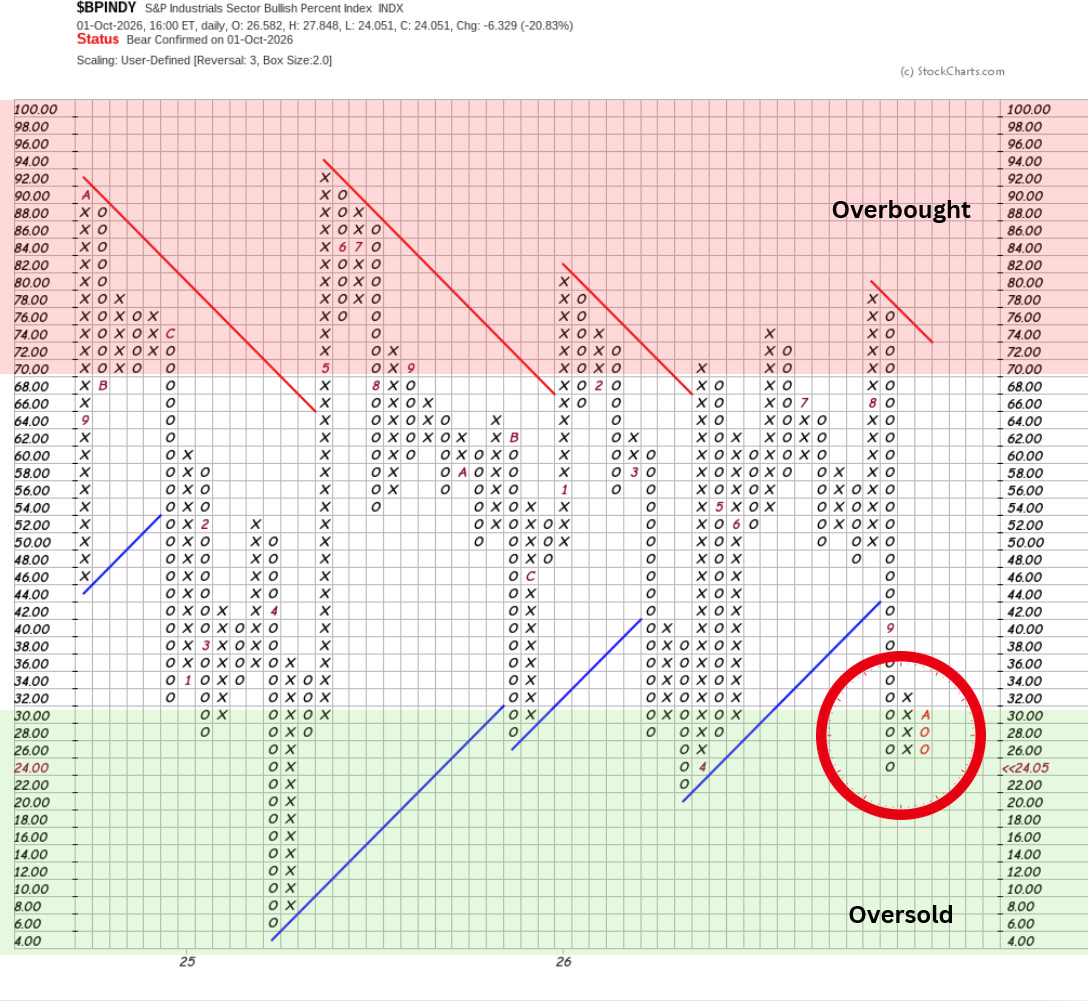
We now need to ask ourselves: why are traders/investors who have been bullish on the market not taking advantage of oversold conditions?
To me, it indicates that investors are starting to worry about the warning signs from the bond market.
What May Calm the Bond Market
What needs to happen next for me to feel more bullish on stocks?
The Fed starts to get aggressive about inflation. This can come in the form of a strong speech by Fed Chair Warsh or a signal that the Fed will raise rates right before the midterm elections (it is assumed by numerous Wall Street analysts that the Fed will stay quiet before the election to avoid political scrutiny).
A large number of investors throw in the towel on equities and allocate a significant amount of their portfolio towards a 10-year bond that will pay them 5.1%.
Of course, the problem with scenario 2 is that inflation eats away at the real return. Assuming inflation is at 3.4%, the real return is only 1.7%. I think yields need to rise higher before scenario 2 occurs.
A significant new AI model release or tools that are quickly being adopted into the supply chain. One argument from policymakers is that AI will double worker productivity and lower the cost of goods due to better efficiency and better workflow/systems management.
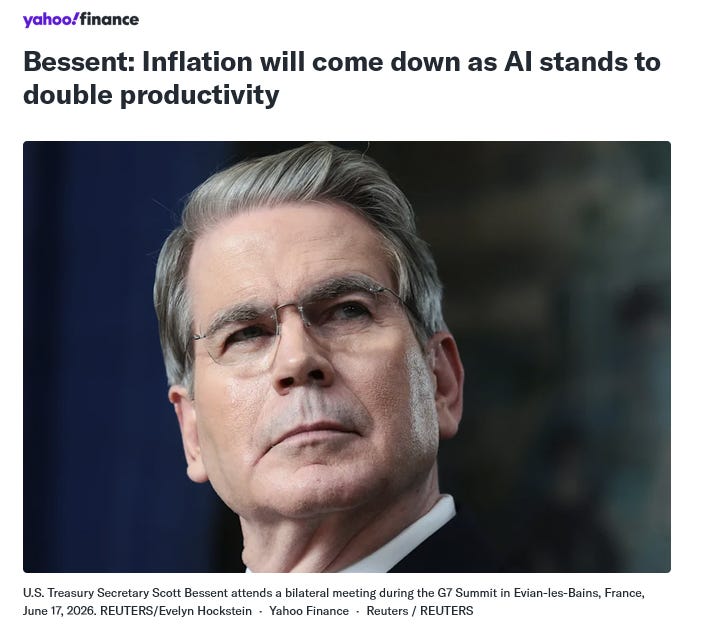
While this may be true (we saw a similar scenario play out with the internet), I think we are still too early in the AI cycle for the relief the bond market wants now.
Economic data begins to support the Fed outlook. If we start to see continuing trends in the data (like this morning’s weak jobs reports), the bond market may calm down, as a weaker consumer may cause less consumer spending - which means less demand, forcing prices lower.
Equity investors flat-out ignore the warning signs and start to take advantage of the oversold conditions within the various areas of the market.
"The market will punish your theory" is a classic Wall Street saying that serves as a brutal reminder: the financial markets do not care about opinions, academic models, or intellectual pride.
For now, keep an eye on the charts and your process.
I use a systematic, rules-based methodology that helps remove the emotion of investing. If the market begins to strengthen due to an increasing demand for equities, then the charts will tell us.
In the model I run for investors at ARTAIS Capital, I have been raising cash and allocating to non-correlated asset classes, while keeping tight exit rules on the stocks we are invested in.
